6. Leveling Work pieces and Securing with Clamps.
Why Leveling and Clamping Matters.
In woodworking, leveling ensures that surfaces are even, balanced, and aligned before fastening. If a work piece is not level, you may end up with gaps in joints, crooked assemblies, or unstable furniture.
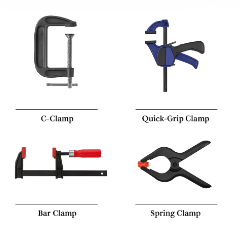
Clamps hold pieces in place while glue dries, fasteners are installed, or adjustments are made. They prevent movement that could cause misalignment. Different clamp types are designed for different jobs:
- C-Clamp: Provides strong, concentrated pressure for small to medium workpieces.
Quick-Grip Clamp: Easy one-handed operation, ideal for quick setups.
Bar / F-Clamp: Long reach for larger assemblies.
Spring Clamp: Lightweight, fast, and portable for temporary holds.
Pro Tip: Always check your work piece for level before and after clamping. Tightening clamps can shift alignment. Tool Identification.
Safety Review: Using Clamps Safely.
Clamps are powerful tools that help hold materials in place while you work, but if used improperly, they can cause damage to your project—or even injury. Understanding how to use clamps safely is an essential part of woodworking.
1. Watch Out for Pinch Points
Many clamps, especially C-clamps and quick-grip clamps, have moving parts that can pinch your fingers if you’re not careful. Always keep your hands clear of the tightening mechanism when adjusting or releasing a clamp.
2. Avoid Over-Tightening
Applying too much pressure can damage wood by leaving dents or even causing cracks. Tighten clamps just enough to hold the work piece securely—no more.
3. Use Protective Pads
Place a small piece of scrap wood, cardboard, or clamp pads between the clamp and your work piece. This prevents clamp jaws from marring or scratching the surface.
4. Check Stability Before Working
Once your clamps are in place, gently try moving the workpiece to ensure it is held securely. If it shifts, readjust and recheck the clamping.
Questions
Why is it important to avoid placing your fingers near clamp tightening mechanisms?
What can happen if you tighten a clamp too much?
Name one material you can use to protect the surface of your work from clamp damage.
What should you do after clamping a work piece to make sure it’s secure?
List two safety tips for using clamps:
1.
2.
Leveling Practice
Scenario: You are joining two boards to make a tabletop.
1. Place the boards side by side on a flat surface.
2. Use a bubble level to check if they are even.
3. Insert shims or adjust position until level.
4. Select an appropriate clamp for the width of your boards.
5. Clamp the boards together.
6. Re-check level and adjust if needed.
Mixed Clamp Challenge
Instructions:
Join three pieces of wood into a
T` shape.Use at least two different clamp types.
Check level at every stage.
Reflection Questions:
1. Which clamp was easier to use? ___________________
2. Which clamp held more securely? ___________________
3. What was the most challenging part of keeping the work pieces level? ___________________