5. Using an Orbital Sander.
Objective
Students will learn the purpose, safety protocols, and basic use of an orbital sander through guided content and a hands-on sanding task.
Lesson Structure
Part 1: Introduction Reading
An orbital sander is a handheld power tool used to smooth surfaces using a rapidly rotating sanding pad that moves in small, circular motions. It’s commonly used in woodworking to smooth wood surfaces, remove old paint or finishes, and prepare material for staining or sealing. Choosing the right grit sandpaper is essential—coarse grits (60–80) are best for heavy removal, while finer grits (120–220) are used for finishing. Proper personal protective equipment (PPE) is important when operating an orbital sander, including safety goggles to protect your eyes, a dust mask to avoid inhaling fine particles, and ear protection to guard against prolonged noise exposure. Always prioritize safety: keep hands away from the sanding pad during operation, use clamps or a vice to secure yourworkpiece, and always unplug the sander before changing discs or making adjustments.
Part 2: Tool Walkthrough
Activity:
Examine an orbital sander
Identify the parts.
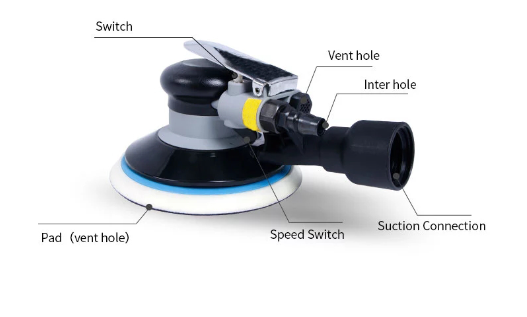
Part 3: Safety Checklist & Practice Setup
Activity:
Complete a Safety Checklist before sanding:
PPE on
Disc attached securely
Wood clamped
Area clean and ventilated
Cords out of path
Part 4: Hands-On Practice
Task:
Sand a small board (e.g., 6 x 12)
Start with coarse grit (80), finish with fine grit (150-220)
Keep sander flat, move in slow circular motions
Do not press down—let the sander do the work
Goal: Achieve a smooth, even surface without swirls.
Part 5: Reflection
Activity:
Write in your notebook:
What went well?
What was difficult?
One tip they’d share with a peer
Printable Safety Checklist
☐ PPE on (goggles, dust mask, ear protection)
☐ Sanding disc securely attached
☐ Workpiece clamped or secured
☐ Area clean and ventilated
☐ Cords clear and untangled
☐ Tool inspected for damage
☐ Understanding of the ON/OFF switch
☐ Dust bag or vacuum attached (if available)
☐ Practiced grip and stance